
The inaugural 2025 Hospital Universiti Malaysia Sabah (HUMS) Juniors Open Pickleball Tournament marked the beginning of Sabah's pickleball tournament calendar for the year.

It was organized by Kelab Kebajikan dan Rekreasi HUMS (KKRHUMS) in conjunction with the Sabah Pickleball Association (SAPA), and notably, this was the first ever Sabahan tournament devoted exclusively to junior players.

According to the SAPA President, Julita Akabal, the purpose of the tournament was to unearth new talent among junior players, and to encourage new players to further their interest and achievement in the sport.

“This tournament also the best platform to provide veteran juniors with an avenue for high quality competitions at local level to prepare them for inter-state and international events.

“To that effect, the tournament was divided into Novice and Intermediate categories, to encourage new and less experienced players to garner competition experience without fear of being overwhelmed or dominated by state players,” she said.

Meanwhile, Director of HUMS, Associate Professor Dr Malehah Datuk Mohd Noh, who was on hand to witness the U12 closing ceremonies and award the prizes to the winners, commended pickleball as being part of a very important public health strategy especially for younger people, who are currently inundated with the twin evils of smartphone addiction and obesity.

“I was pleased to see many young people join and was happy that for a new sport, there had been such high level of visibility and regular training and competition.

“I hoped that SAPA and HUMS will organize more junior pickleball tournaments and also regular matches and hopes that the UMS Pickleball Arena will one day reach tournament standard,” she said.

The tournament featured 30 junior players between ages 7 to 17, representing more than 10 primary and secondary schools, and even featuring two players with British nationality.

In the U12 male doubles category, Muhammad Ammar Asyraf and Ivanovic Saniyil, both from SK Malawa, achieved victory in the novice category for beginner players, whereas Dominic Ziquan Pang from SJK (C) St James and Seth Ooi Jhu Fen from SRS Datuk Simon Fung were the winners of the Intermediate category for tournament level players.

For the U12 female doubles category, Nursuhannah Mohd Shahnaz and Nurshahirah Mohd Shahnaz, both from SJK (C) Yick Nam, were the victors in the novice category.

The U17 female doubles novice category was won by Sarah and Eliana Sandah from SMK St Francis Convent.

In the U17 male category had a large range of high-level players compete, and they did not disappoint.

The U17 intermediate category was won by Nathan and Samuel Guansing, who narrowly pipped Golden Chong Hon Yee and Jayden Jay Ng from SMJK Shan Tao into second place.

Third place finishers were Ravin Tampi and Jayden Tiu from SM All Saints.
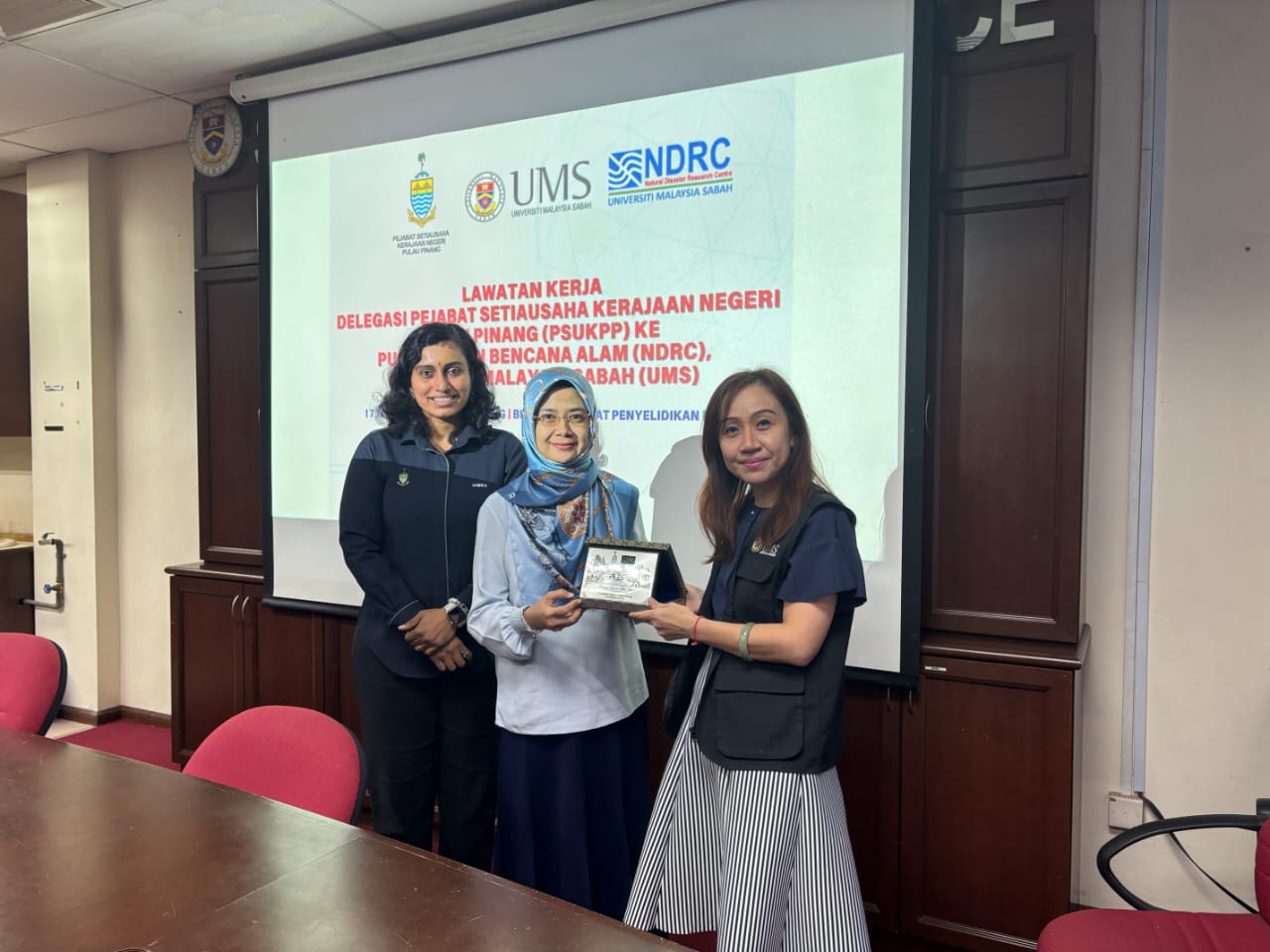
 

The Natural Disaster Research Centre (NDRC) at Universiti Malaysia Sabah (UMS) aims to further explore smart collaborations with various agencies to enhance disaster management efforts.

This was highlighted by the Director of NDRC, Assoc. Prof. Ts. Gs. Dr. Carolyn M. Payus, while welcoming a working visit from the delegation of the Penang State Secretary's Office (PSUKPP), led by the Head of the Disaster Management Unit, Ambika Devi a/p Daran, to UMS recently.

According to Carolyn, the visit by PSUKPP aimed to gain a deeper understanding of NDRC's functions and research activities, as well as to explore cross-sector collaboration opportunities in disaster management.

“We warmly welcome visits from government agencies and NGOs, such as PSUKPP, which open up opportunities for collaboration in research and consultancy related to national disaster management across various sectors.

“Such visits encourage academic collaboration and foster smart understanding between NDRC UMS and state government agencies like PSUKPP in strengthening the national disaster risk reduction agenda,” she said.

She added that NDRC serves as a focal point for all disaster-related research in Sabah.

“The center is also actively involved in disaster risk management and reduction activities through research and public awareness programs, particularly in enhancing community preparedness for disasters.

“This includes initiatives to empower the implementation of Community-based Disaster Risk Management (CBDRM) in Sabah,” she explained.

During the visit, Carolyn introduced NDRC researchers and officers present, including Disaster Communication Research Fellow from the Faculty of Social Sciences and Humanities (FSSK) UMS, Dr. Mumamad Ikhram Mohamad Ridzuan; Deputy Director I of the Sabah Weather and Earthquake Operations Center, Malaysian Meteorological Department, Dr. Chai Mui Fatt, who is also an Associate Research Fellow at NDRC; and NDRC Research Officer, Eldawaty Madran.

At the end of the visit, the nine-member delegation toured the Earthquake Monitoring System, SEISCOMP3, at the NDRC Laboratory, the Kota Kinabalu Seismology Station (UMS), and the Tidal Gauge (Tsunami) Station operated by MET Malaysia at the UMS Jetty.

A technical briefing on the functions of SEISCOMP3, the Seismology Station, and the Tidal Gauge (Tsunami) was delivered by Dr. Chai Mui Fatt.

Also present during the visit were the Secretary of the Human Resource Management Division at PSUKPP, Roziyah Shariff; Head of the Corporate Communications & Innovation Unit, Saiful Syarizal Yaakob; Head of the Integrity Unit, Mohd Faizal Che Meh; and Secretary of the Council and Protocol Management Division, Mohd Roshidi Azmi.


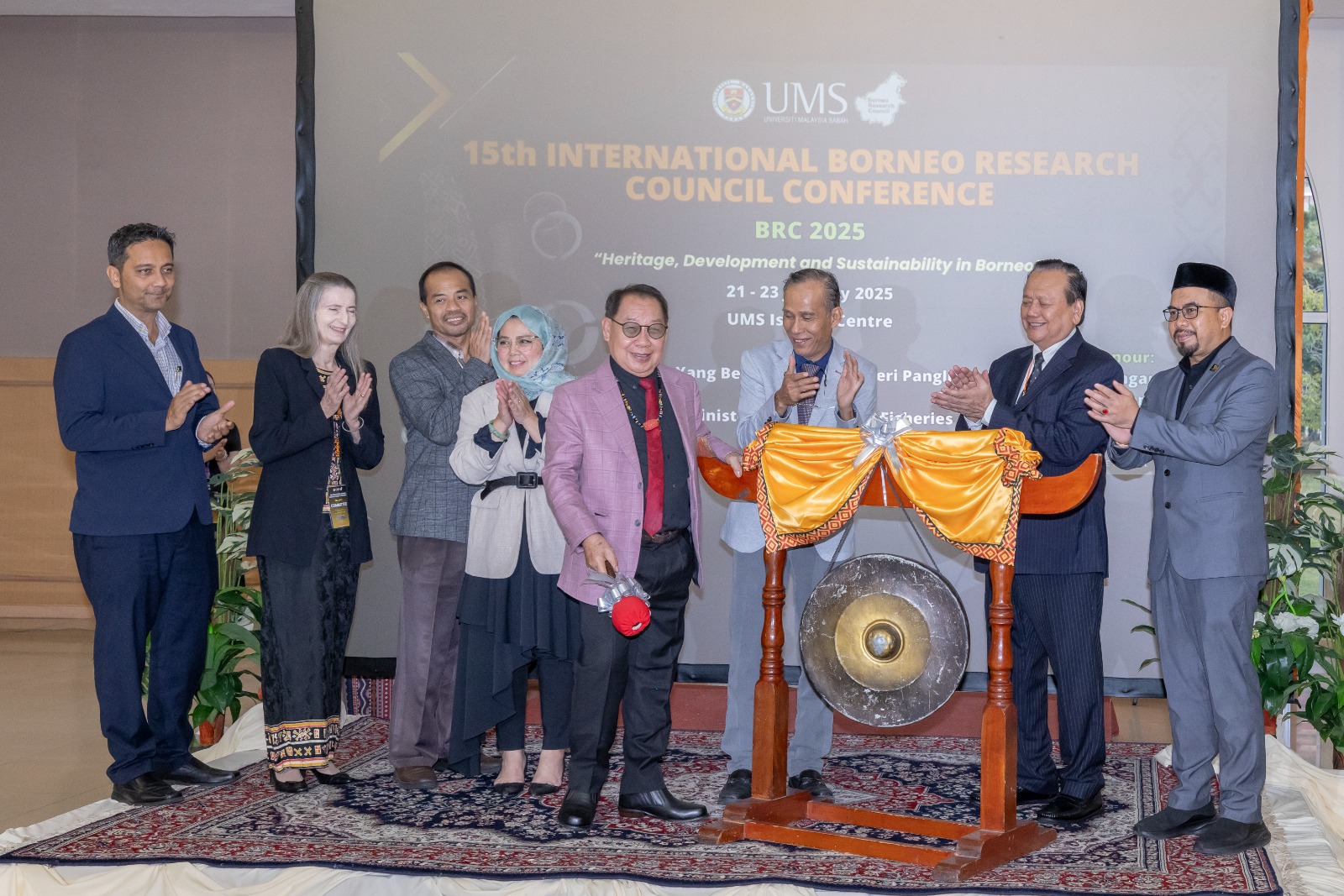
Universiti Malaysia Sabah (UMS) has been chosen to host the 15th Borneo Research Council (BRC) International Conference, bringing together academics and researchers from both local and international institutions to discuss various aspects of Borneo studies.

The conference was officially inaugurated by Sabah Deputy Chief Minister and Minister of Agriculture, Fisheries, and Food Industry, Datuk Seri Panglima Dr. Jeffrey G. Kitingan.

In his speech, Jeffrey highlighted that BRC has consistently supported and promoted research in social sciences, biology, environmental, and medical fields in Borneo since its establishment in 1968.

“The selection of UMS as this year’s host underscores the university’s commitment to advancing knowledge about the Borneo archipelago.

“Borneo, the third-largest island in the world, holds strategic significance in Southeast Asia and is renowned for its rich biodiversity and unique geological features, including Mount Kinabalu, the highest peak in the region.

“The island has been a hub for migration and human social development for thousands of years, with North Borneo—now known as Sabah—believed to be a primary dispersal point for Austronesian communities,” he said.

He further noted that linguistic studies, particularly those conducted by the Summer Institute of Linguistics (SIL) Malaysia since the 1970s, have identified 58 major Austronesian languages spoken in northern Borneo, with over 35 languages originating from Sabah.

“These languages, including Dusun, Paitan, and Murut, are unique to the region and have been the subject of extensive genetic and linguistic research at UMS,” he added.

Jeffrey also emphasized the importance of traditional knowledge in environmental sustainability practices, citing the Dusun community’s paddy farming methods in Tambunan as a prime example.

“Traditional rice varieties in the region, known for their resilience and high yield, have been cultivated for generations without the need for chemical fertilizers or pesticides.

“Despite challenges such as declining buffalo populations, farmers continue to uphold these agricultural practices.

“In addition, indigenous river conservation systems known as bombon among the Dusun and tagal among the Rungus have been recognized as effective traditional approaches to environmental sustainability.

“These systems, which involve prohibitions on fishing in designated areas, have been integrated into modern conservation efforts with the support of the Sabah government since 2003,” he explained.

He expressed hope that the conference would serve as an ideal platform to further discuss Borneo’s heritage and traditions while supporting UMS’s ongoing efforts in cultural artifact research and enhancing the understanding of Borneo’s rich legacy.

Earlier, UMS Deputy Vice-Chancellor (Research and Innovation), Prof. Ir. Dr. Rosalam Sarbatly, representing UMS Vice-Chancellor, Prof. Datuk Dr. Kasim Hj. Mansor, stated that UMS's primary research focus encompasses social, biological, natural, and medical sciences in Borneo, particularly in Sabah.

“As a result, UMS has been recognized as a regional reference center for Borneo studies.

“Our research objectives align with BRC’s goals, and I am delighted that UMS has once again been selected to host this prestigious conference,” he said.

He also expressed his hope that all presenters and participants would benefit from productive discussions, meaningful interactions, and the sharing of inspiring ideas and new discoveries.

The three-day conference gathered over 100 participants, including nearly 40 international attendees from Germany, the United States, Canada, Japan, South Korea, Indonesia, Singapore, and Brunei Darussalam.

Also present at the opening ceremony were the Director of the Borneo Institute for Indigenous Studies (BorIIS) UMS, Assoc. Prof. Dr. Normah Abdul Latip, who chaired the organizing committee; Dean of the Faculty of Social Sciences and Humanities, Prof. Dr. Asmady Idris; and the Kadazan-Dusun Chair of UMS, Datuk Seri Panglima Clarence Bongkos Malakun.


Universiti Malaysia Sabah (UMS), through its Faculty of Business, Economics, and Accounting (FPEP), has entered into a collaboration agreement with the Malaysia Competition Commission (MyCC) to enhance cooperation in the field of competition law.

In a statement, FPEP explained that the collaboration was formalized through a Memorandum of Understanding (MoU) between both parties, which paves the way for UMS and MyCC to work together, particularly in education, research, publication, and training related to competition law.

“This collaboration also provides opportunities for resource sharing and knowledge exchange between UMS lecturers and MyCC officers, as well as priority access to industrial training placements for UMS students and lecturers at MyCC.

“This initiative is expected to benefit UMS students by adding value and providing industry exposure, while also highlighting the ongoing close cooperation between public universities and government agencies through strategic sharing of human resources and expertise,” the statement added.

FPEP further stated that a formal MoU document exchange ceremony between UMS and MyCC was held at the Sheraton Imperial Kuala Lumpur Hotel in conjunction with the MyCC Competition Law Symposium 2025, which was attended by more than 250 participants.

UMS was represented by the Dean of FPEP, Assoc. Prof. Dr. Mohd Rahimie Abd Karim, while MyCC was represented by its Chairman, Tan Sri Dato’ Sri Idrus Harun. The exchange was witnessed by the Minister of Domestic Trade and Cost of Living, Datuk Armizan Mohd Ali.

Earlier, in his speech, Armizan highlighted that the collaboration not only focuses on advancing education and research but also on promoting competition law as a key academic discipline.

He further stated that the partnership is not only an investment in the academic field but also a bold step toward strengthening Malaysia’s expertise and influence in competition law across the Asian region.


The Universiti Malaysia Sabah (UMS) community has warmly welcomed the seven key focuses and ten transformation agendas of the Ministry of Higher Education (KPT), which set the direction for the nation's higher education sector this year, as announced by the Minister of Higher Education, Dato' Seri Diraja Dr. Zambry Abd Kadir, in his recent New Year address.

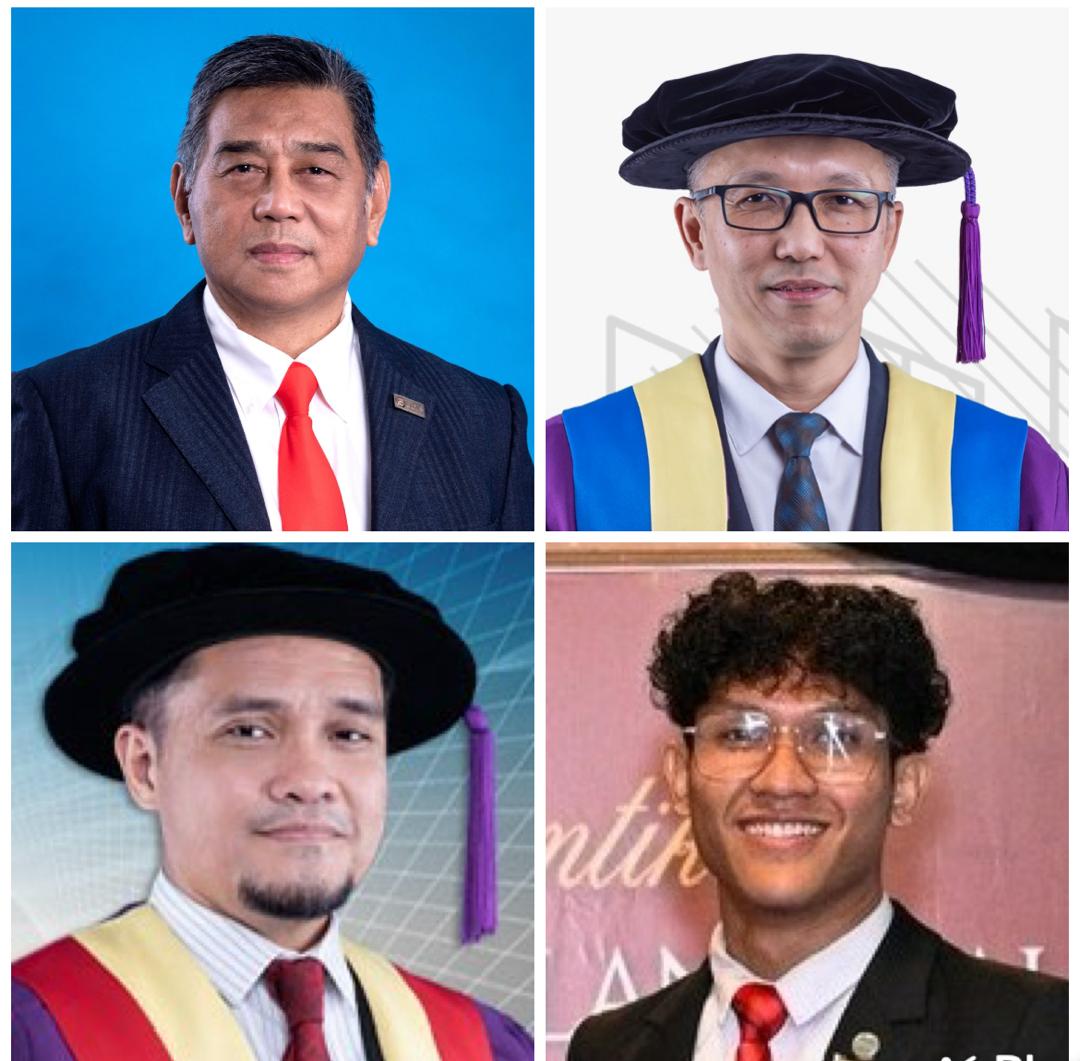
UMS Vice-Chancellor, Prof. Datuk Dr. Kasim Hj. Mansor, stated that the 2025 New Year address by Zambry reflects his attentiveness to the voices of academics who seek clear and fair policies on issues such as lecturer promotions and the need to establish an evaluation mechanism for seconded or loaned officers.

“These issues are critical to ensuring the inclusive and fair career progression of academic staff.

“UMS fully supports the Higher Education Minister’s call, in line with our efforts to empower the university community as the heartbeat of KPT’s vision, ‘The Brain of the Nation.’

“The University-Industry-Community collaboration suggested by the ministry will also be a primary agenda in our higher education planning,” he said.

Prof. Kasim’s statement was echoed by the Dean of the Centre for the Promotion of Knowledge and Language Learning (PPIB), Assoc. Prof. Dr. Lai Yew Meng, who emphasized that KPT's direction this year is a well-structured, holistic, inclusive, balanced, and visionary strategic plan.

“The key focus areas and transformation agenda reflect the ‘3C’ principle – Change, Continuity, and Consolidation – which aims to drive and strengthen the higher education agenda in addressing the increasingly VUCA (volatile, uncertain, complex, ambiguous) world.

“As the Dean of PPIB, I am particularly interested in Program 3 under Focus 5: Governance and Leadership, which aims to enhance General Studies (MPU) subjects offered at PPIB.

“This agenda aligns with the goals and aspirations of the National Education Philosophy and reflects KPT's commitment to ensuring that higher education remains anchored to its ‘True North,’ meaning its fundamental purpose in sustaining the human element amidst rapid global transformations,” he added.

Meanwhile, the Dean of the Faculty of Computing and Informatics (FKI), Assoc. Prof. Dr. Mohd Hanafi Ahmad Hijazi, pointed out the significant emphasis on digital technology mastery, particularly artificial intelligence (AI), highlighted in two of the seven focus areas.

“Developing talent proficient and ethical in AI, both as creators and users, is critical to keeping up with the rapid advancements and global competition in AI adoption.

“The strategic direction also focuses on AI application development in higher education, not only in teaching and learning but also in operations.

“This initiative positions KPT as a leader in AI adoption within government agencies, leveraging the ministry’s extensive expertise,” he noted.

UMS Registrar, Luqman Ridha Anwar, commended the address for providing a clear roadmap to further elevate the excellence of higher education institutions. Similarly, the Dean of the Faculty of Social Sciences and Humanities (FSSK), Prof. Dr. Asmady Idris, viewed the minister’s message as perfectly aligned with national educational aspirations and an essential guide to navigating global challenges.

Senior Lecturer at FSSK’s Communication Program, Dr. Haryati Abdul Karim, also responded positively to the address.

“I am pleased that issues concerning lecturers, such as workload and promotions, were highlighted in the minister’s speech.

“This shows that the minister is receptive and attentive to the concerns of academic staff,” said Haryati.

UMS Student Representative Council (MPP) President, Yusuf Naim Muhammad Idris Lutfi, echoed the sentiment, expressing confidence that the higher education roadmap will develop holistic human capital, particularly at UMS.

“As students in the post-normal era, it is crucial to cultivate well-rounded and balanced human capital.

“Therefore, MPP UMS urges all students to support the government’s vision in fostering a credible, industry-competitive, and lifelong learning society.

“Student support and active participation are key to realizing this aspiration for a brighter future for the nation,” said Yusuf.