

The establishment of the Center for Economic Development and Policy (CEDP) at the Faculty of Business, Economics, and Accountancy (FBEA), Universiti Malaysia Sabah (UMS), signifies UMS’s commitment to driving impactful and meaningful research.
UMS Vice-Chancellor, Prof. Datuk Dr. Kasim Hj. Mansor, emphasized that CEDP is uniquely positioned to provide critical research input to enhance policymaking at both the state and national levels.
“This center must expand its partnerships with government agencies, industry players, and international institutions to create a robust ecosystem that drives impactful solutions for Sabah and Malaysia.
“I have high hopes for CEDP to become a catalyst for innovative thinking, collaborative research, and evidence-based policy development,” he said.
He conveyed these remarks during his speech at the Launch Ceremony of CEDP and the Seminar on Contemporary Economics held at Hotelab, FBEA.
The speech was delivered on his behalf by FBEA Dean, Assoc. Prof. Dr. Mohd Rahimie Abd. Karim.
Commenting on the organization of the economics seminar, Kasim stated that the initiative represents a convergence of ideas, efforts, and aspirations to address pressing economic challenges of the time.
“Sabah faces numerous economic challenges, including poverty and the need for sustainable economic growth.
“This is an opportunity to discuss emerging economic challenges, introduce new ideas, and foster collaborations that will help navigate the evolving economic landscape,” he remarked.
He added that the initiative also holds the potential to bridge the gap between research and actionable policies to tackle the issues discussed.
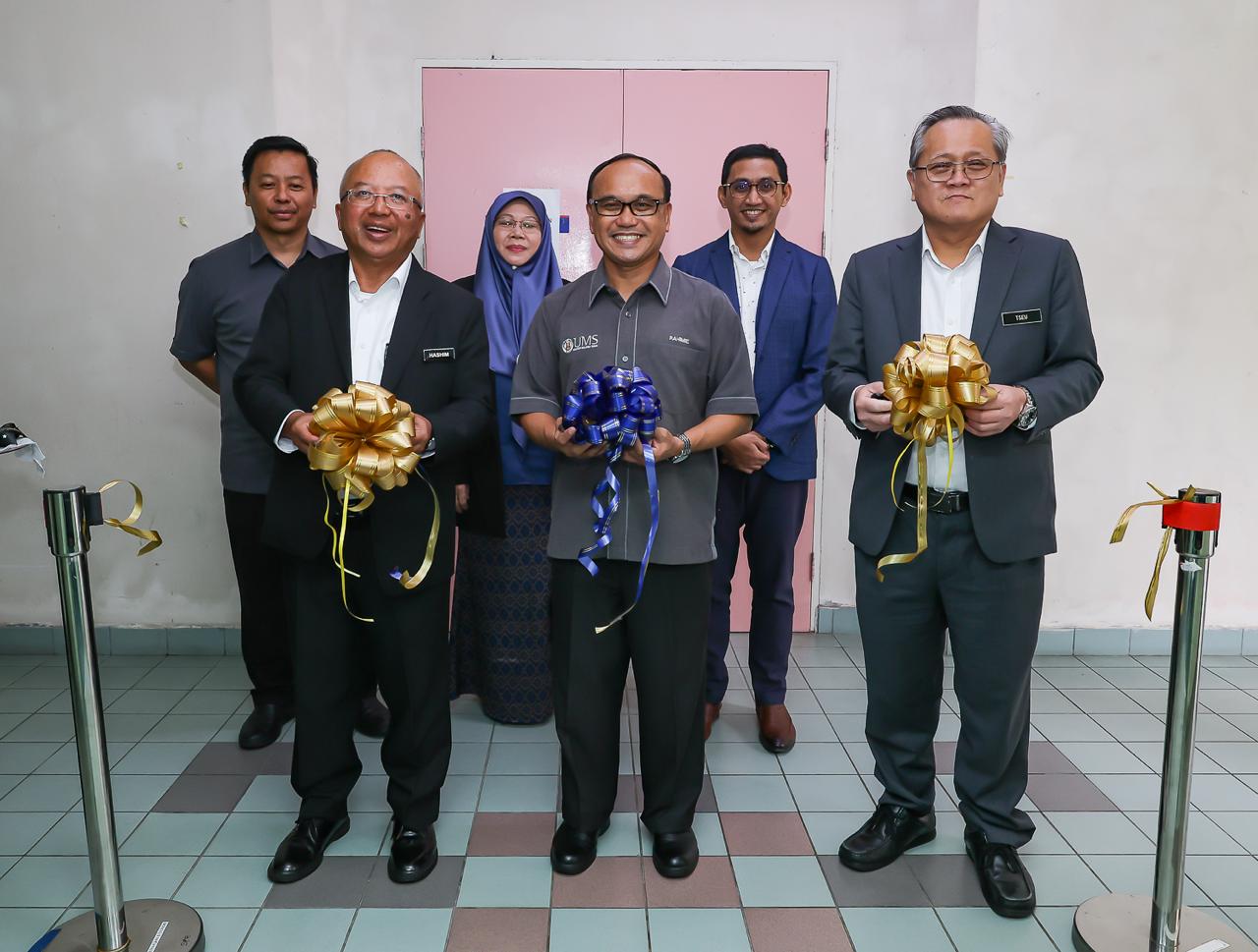
The event also featured a Panel Discussion involving two invited panelists: the Chief Executive of the Sabah Economic Development and Investment Authority (SEDIA), Datuk Seri Panglima Hashim Paijan, and the Deputy Director of the Sabah State Economic Planning Unit, Tseu Kei Yue.
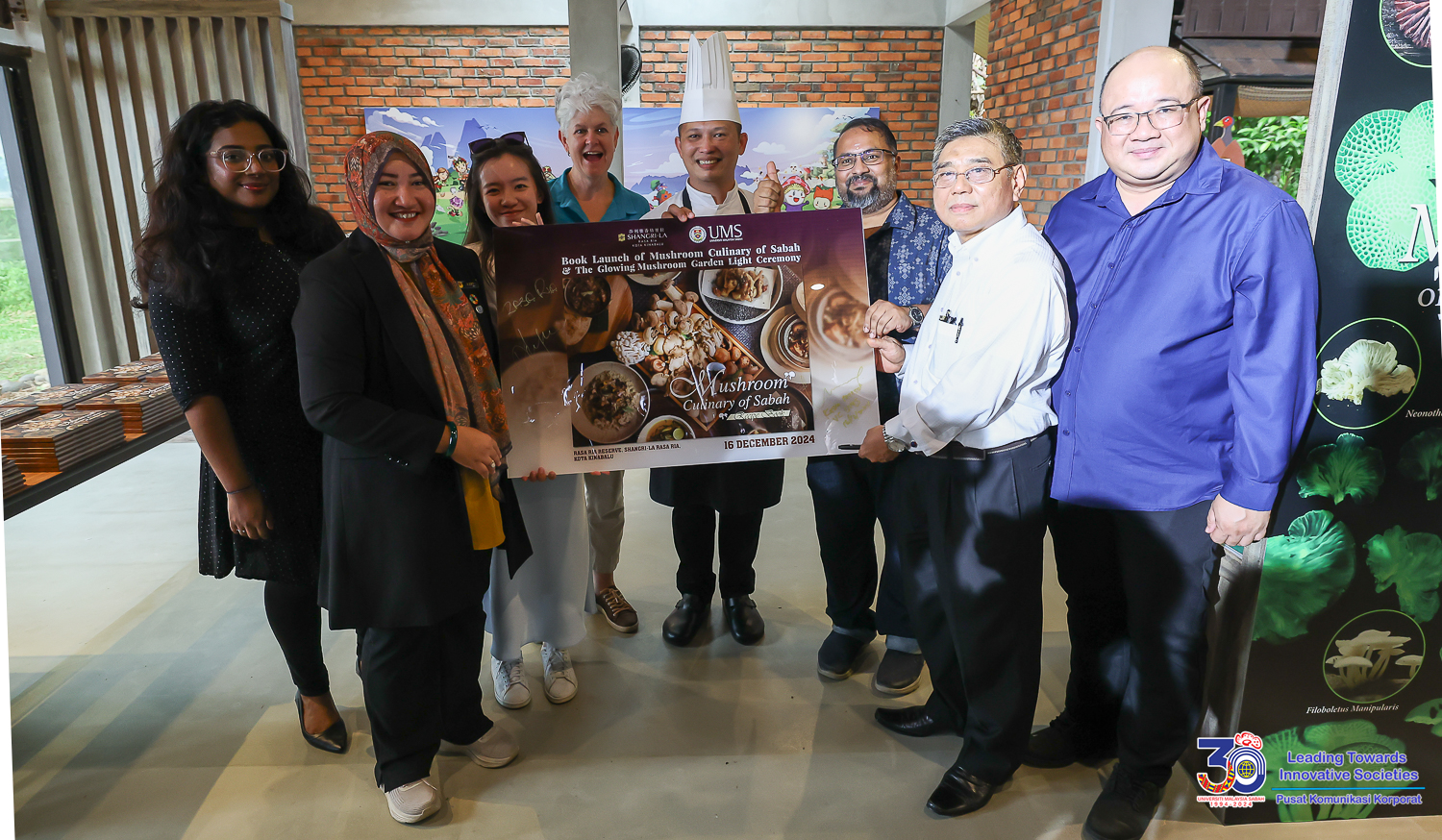
Shangri-La Rasa Ria, Kota Kinabalu, celebrated a night of innovation and discovery, strengthening its collaboration with Universiti of Malaysia Sabah (UMS) through the launch of Mushroom Culinary of Sabah, a recipe book showcasing the culinary and ecological significance of mushrooms, alongside the unveiling of Malaysia’s first bioluminescent mushroom display.
The evening commenced with the launch of Mushroom Culinary of Sabah, a collection of 33 exceptional recipes created by the resort’s seasoned culinary expert and Sous Chef, Chef Elroy Ernest. Drawing on his local heritage and deep appreciation for Sabah’s biodiversity and over 20 years of experience, Chef Elroy crafted recipes highlighting locally sourced mushrooms’ versatility, nutritional benefits, and cultural essence.
“This book exemplifies our Rooted in Nature ethos,” said Chef Elroy. “Our reserve serves as an extension of the Chef’s Garden, allowing us to cultivate ingredients sustainably and connect our guests with nature. From farm to table, these recipes celebrate Sabah’s rich culinary traditions and incredible natural resources.”
The event’s highlight was the unveiling of Rasa Ria Reserve After Dark: The Glow Experience.
This groundbreaking bioluminescent display was developed in collaboration with UMS and led by Associate Professor Dr Jaya Seelan A/L Sathiya Seelan and his team from the Institute for Tropical Biology and Conservation (ITBC).
Located within the resort’s 64-acre Rasa Ria Reserve, the glowing mushroom installation offers guests an immersive experience blending science, art and nature.
“This partnership with Shangri-La Rasa Ria is a significant milestone for UMS,” said Dr Jaya.
“The glowing mushroom garden is not only a scientific achievement but also a celebration of Sabah’s unique biodiversity. It exemplifies what can be achieved when research and innovation are paired with a commitment to environmental sustainability.”
General Manager Fiona Hagan highlighted the broader impact of these initiatives. “Mushroom Culinary of Sabah and the Rasa Ria Reserve After Dark: The Glow Experience reflect our dedication to fostering biodiversity, sustainability and cultural appreciation,” she said. “These projects are integral to our ESG framework, promoting environmental stewardship and youth development while offering guests meaningful connections to Sabah’s natural wonders.”
Through initiatives like these, Shangri-La Rasa Ria continues to lead in sustainable tourism, offering guests transformative experiences that celebrate Sabah’s ecological and cultural heritage while supporting local communities and reducing environmental impact.
Present were UMS Vice Chancellor Prof. Datuk Dr Kasim Hj. Mansor and Professor Madya Dr Fiffy Hanisdah Saikim Director, Institute for Tropical Biology and Conservation (IBTP), UMS.
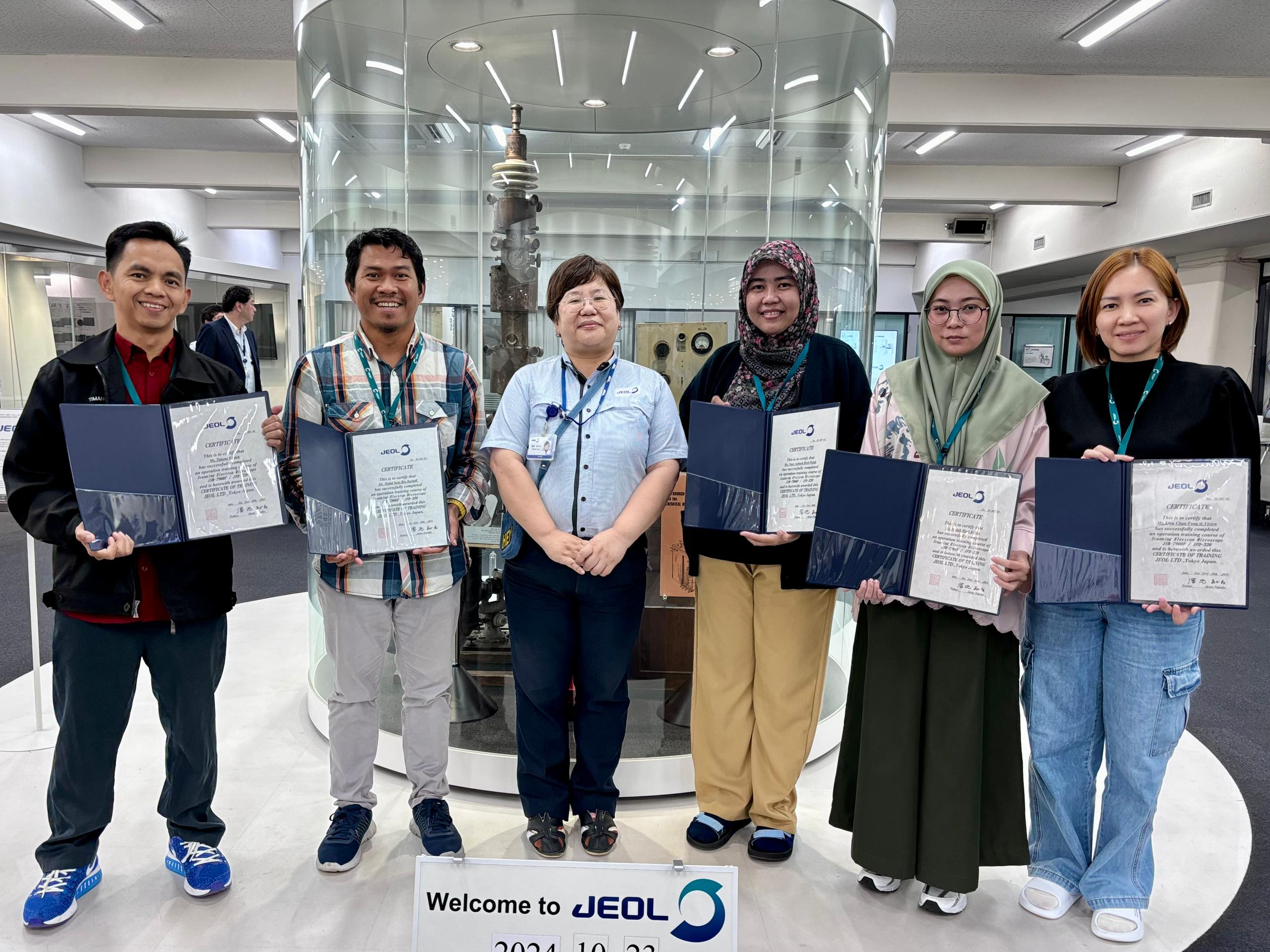
The Instrumentation and Science Services Center (PIPS) of Universiti Malaysia Sabah (UMS) recently sent five staff members to participate in an advanced training program at the JEOL Factory in Ohtemachi Chiyoda-ku, Japan.
The five-day training focused on understanding the theory and operation of the Jeol Field Emission Scanning Electron Microscopy (FESEM) Model JSM-7900F.
The team included the Deputy Director of PIPS, UMS, Assoc. Prof. Ts. ChM. Dr. Mohd Sani Sarjadi, along with other staff members with backgrounds in science and technology.
FESEM is an advanced instrument used to examine extremely small surface details on objects, offering resolutions down to the nanometer scale.
According to Dr. Mohd Sani, the instrument is crucial in research fields such as chemistry, physics, and biology, allowing researchers to observe structures as small as 1 nanometer.
“During the course, participants were introduced to in-depth FESEM techniques and applications, including analyzing surface sample morphology and detecting chemical elements using EDX detection methods.
“The training also included practical sessions where participants had hands-on experience with the FESEM equipment, enabling them to gain a better understanding of its operations and capabilities.
“By attending this course, participants are expected to bring back valuable knowledge that will enhance the efficiency of FESEM usage at PIPS, UMS. This, in turn, will maximize the potential of the instrument in conducting research and analysis at the institution,” he explained.
The training was conducted by JEOL’s Manager of the Solution Promotion Department, Akane Tameike.
Dr. Mohd Sani further stated that through the course, participants would be able to offer expert consultation services to researchers at UMS and industry players, reducing reliance on external service providers for sample analysis using FESEM.
“The quality of research at UMS is also expected to improve through the more efficient application of FESEM technology, contributing to the advancement of knowledge and technology in Malaysia. Additionally, the training has the potential to elevate PIPS UMS’s profile as a leading reference center for FESEM analysis in the country.
“This training marks a significant step in PIPS UMS’s efforts to continuously develop the capacity and capabilities of its staff in the field of electron microscopy.
“With the knowledge and experience gained from this training, PIPS is expected to create a positive impact not only for researchers at UMS but also for the industry and the wider community,” he added.
PIPS UMS remains committed to advancing its capacity and capabilities in providing sophisticated and effective analytical services, serving as a catalyst for innovation and high-quality research.

![]()
Terms of Use | Disclaimer | Privacy Policy | Security Policy | Copyright Policy | Contact Us | Best View 1366x768