


Article By:
Assoc. Prof. Dr. Connie Shin Connie Cassy Ompok & Assoc. Prof. Lee Bih Ni
Unit for Rural Education Research
Faculty of Education and Sport Science UMS
Limited access to early childhood education continues to pose a major barrier to achieving equitable lifelong learning opportunities, especially for children living in villages and remote communities. Over the past decade, many regions across Asia have witnessed a decline in outdoor play, largely influenced by rapid urbanization and increasing parental concerns about safety. In several Asian contexts, there is a strong emphasis on academic preparation rather than play, which further reduces support for nature-based learning experiences. As a result, children’s opportunities for exploration, social interaction, and holistic development have become increasingly constrained.
Early childhood education institutions themselves face considerable challenges. Among the most pressing issues are limited land availability and insufficient learning spaces. For instance, under the Thirteenth Malaysia Plan (RMK13), many rural areas still do not have adequate access to proper preschool facilities. These structural limitations highlight the need to rethink how learning environments can be designed and utilized, particularly in rural settings.
In contrast to these constraints, village environments offer naturally rich and meaningful contexts for learning. Children in such settings are continuously exposed to daily life activities and the natural world around them. These surroundings support cognitive growth through real-world observation and problem-solving, while also promoting physical development through outdoor play, movement, and exploration. At the same time, regular interaction within the community nurtures social-emotional resilience, encouraging cooperation, shared responsibility, and a sense of belonging. The open-ended nature of village life further inspires creativity and imaginative thinking, allowing children to engage with their environment in flexible and meaningful ways.
To fully harness these benefits, it is important to integrate traditional and play-based learning approaches. This can be achieved by blending foundational academic skills such as literacy and numeracy with interactive methods like role play and storytelling. In addition, nature-centered activities, including outdoor classrooms, nature walks, and simple farming tasks, can further enrich children’s learning experiences. Such an approach ensures that education remains both relevant and engaging, while also rooted in children’s lived realities.
In Malaysia, the well-known children’s song “Di mana Dia Anak Kambing Saya” provides a meaningful illustration of early learning that is closely tied to local identity and everyday experiences. The song, which centres on a child from a village community, reflects the socio-cultural environment that shapes children’s interactions and access to learning. Its playful narrative captures children’s natural curiosity and emphasizes exploration, movement, and
imagination elements that are increasingly recognized as essential in fostering holistic development within early childhood education.
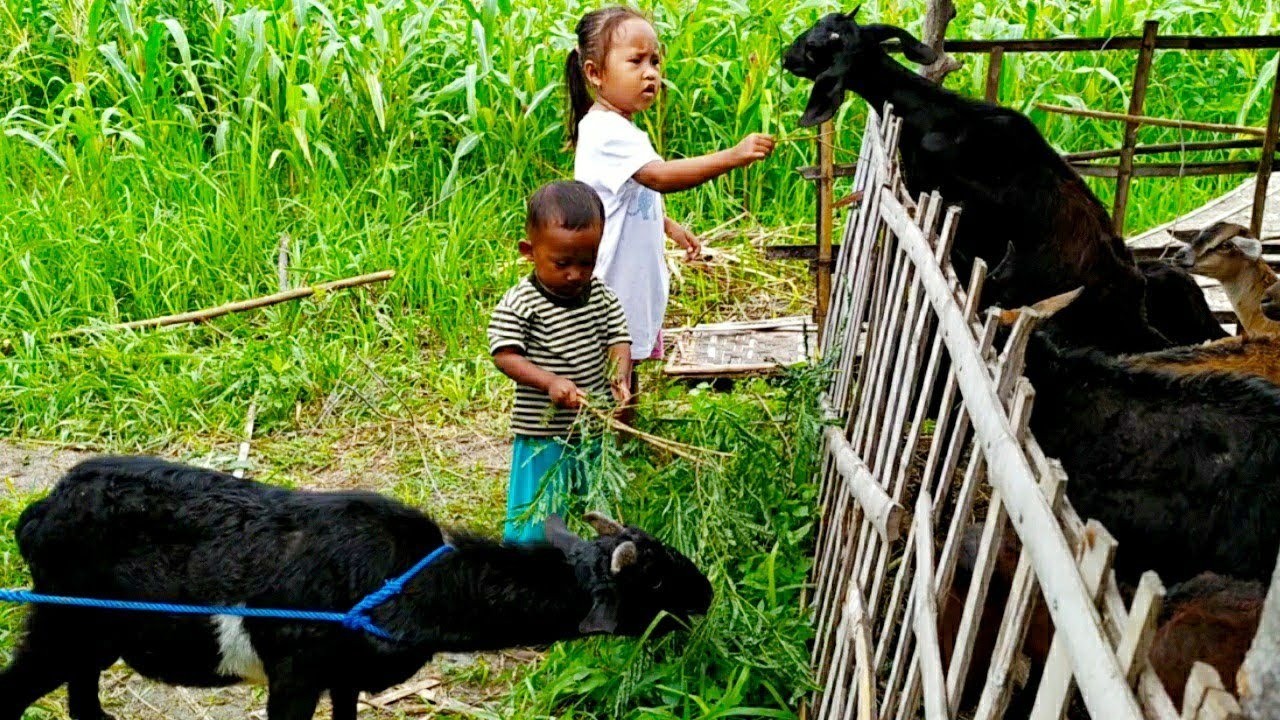
A similar spirit of learning through everyday experiences can be seen in the story of Gilly the Goat at Garden for The Little Star. Each morning, the children eagerly made their way to the playground, not for the usual attractions like slides or sandboxes, but to greet Gilly, a gentle goat who lived beside the garden. With her soft gray fur and bright, curious eyes, Gilly became an important part of their daily routine. She would welcome the children with cheerful sounds and friendly gestures, creating a warm and inviting atmosphere.
Over time, this simple interaction evolved into a meaningful daily ritual known as the Morning Greeting Ceremony. Each day, the children would line up to greet Gilly, gently patting her while she responded with her cheerful maa-aa-aa, creating a joyful start to their morning. Even on rainy days, when it seemed likely that Gilly would remain in her shelter, she would still appear to welcome them, strengthening their sense of consistency, care, and connection.
Through these small yet meaningful moments, the children learned valuable lessons about empathy, friendship, and the importance of nature in their lives. As one of the adults remarked, Gilly had become part of their family. This story illustrates how learning and relationships can grow naturally from everyday interactions, shaped by shared curiosity and simple experiences. Ultimately, it shows that in environments like Garden for The Little Star, learning does not merely begin in the classroom. It begins with connection, nature and sometimes with the gentle presence of a cheerful goat.