

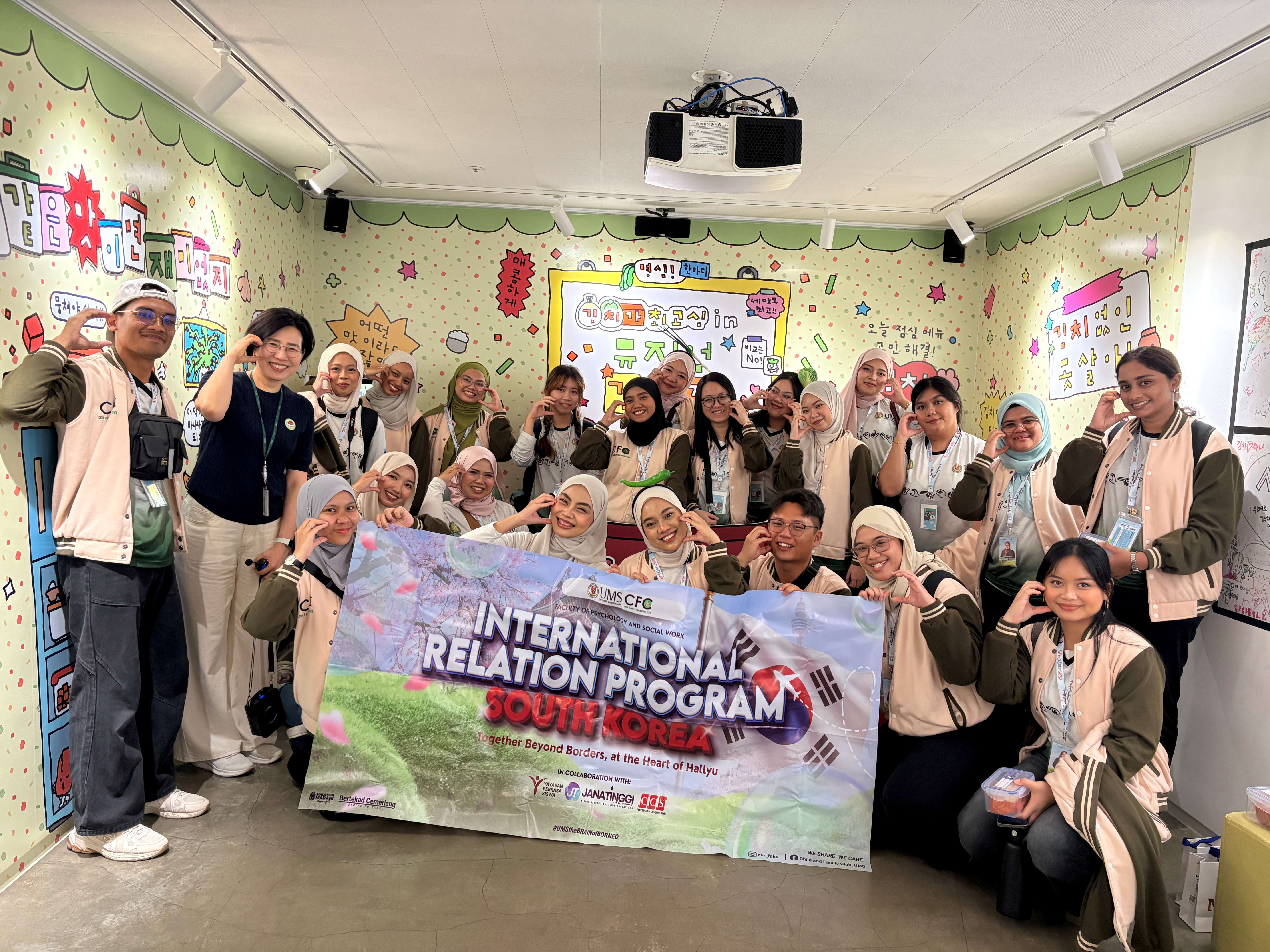
The International Relations Programme (IRP) South Korea 2026 has become the latest initiative by students from the Faculty of Psychology and Social Work (FPKS), Universiti Malaysia Sabah (UMS), in exploring global approaches to early childhood education.
Organised by the Child and Family Psychology Club (CFC) under FPKS, the programme aimed to expose final-year students, particularly those enrolled in the Child and Family Psychology programme, to South Korea’s education system, child development practices, and family well-being approaches.
The programme, which involved 22 participants including two accompanying lecturers, also served as an effort to broaden students’ international exposure and strengthen their global competencies.
FPKS Senior Lecturer and programme coordinator, Dr Janice Hon Kai Yee, said programmes of this nature provide invaluable opportunities for students to understand educational and child development approaches from an international perspective.
“This programme also helps strengthen students’ communication skills, leadership qualities, and global networking opportunities,” she said.
Throughout the programme, the UMS delegation conducted academic visits to several renowned institutions, including Yonsei University and Seoul National University.
At Yonsei University, participants visited the Institute for Child and Family Well-Being, a pioneering laboratory school established in 1975, and attended a knowledge-sharing session on the “Open Education” culture, which is centred on trust in children’s innate potential.
Students were also introduced to a range of evidence-based practices, including the “Play-Yonsei” child-led growth initiative and specialized one-to-one parenting consultation models.
The delegation also visited the SNU Childcare Service and Research Center (CESR) Neutinamu, where they gained exposure to the centre’s specialised curriculum that integrates John Dewey’s child-centred philosophy and the Reggio Emilia approach within the Korean cultural and ecological context.
Participants also learned about the “Project Approach”, which promotes emergent and self-directed learning beyond the limitations of time and space, as well as being
introduced to the implementation of the national Nuri Curriculum and the emphasis on daily outdoor activities as part of children’s holistic development.
In addition, the delegation was exposed to comprehensive child wellness practices, particularly in aspects of nutrition and meal planning prepared using natural ingredients under the supervision of professional nutritionists, including the preparation of homemade kimchi on-site.
The comparative academic visit enabled participants to observe the distinct institutional strengths of both universities, particularly Yonsei University’s multi-systemic emphasis on family well-being and nature-based therapeutic environment, alongside Seoul National University’s research-driven focus on holistic child development and structured educare practices.
Students were also given direct exposure to intervention and counselling rooms that apply sand therapy as part of emotional support and child development interventions.
Meanwhile, FPKS Senior Lecturer Dr Nurul Syafira Adi, who also joined the delegation, expressed hope that the programme would further strengthen international collaboration, particularly for UMS.
“It is also hoped that this effort will contribute significantly to the academic, professional, and personal development of participants in the future,” she said.